Contact form

Name

Email *

Message *

Showing posts with label Petroleum. Show all posts

Wednesday, 30 October 2024

Petroleum Philatelic Society International (PPSI) - Golden Jubilee

Commemorative Cover of Golden Jubilee of PPSI

Since 1974, the Petroleum Philatelic Society International (PPSI) has been dedicated to a unique mission: uniting philatelists from around the world who share a specialized interest in the petroleum industry. This journey began as a humble initiative to connect collectors and enthusiasts, while creating an invaluable collection of petroleum-themed stamps issued globally.

In its early years, PPSI collaborated with ‘Les Amis du Pétrole’ (The Friends of Petroleum), an international organization headquartered in Paris, France. This organization collected various petroleum-related memorabilia, including philatelic materials. However, over time, Les Amis du Pétrole ceased operations, and PPSI became primary advocate for petroleum philately.

PPSI's goal is to bring together petroleum philatelists worldwide, transcending geographic boundaries to create a common platform for collecting, studying, documenting, and celebrating the evolution of the petroleum industry. The society members’ topical collection covers all aspects of the petroleum, oil, natural gas, and petrochemical industries, as reflected in postage stamps and allied materials. Petroleum stamps depict critical elements of the industry, such as prospecting, exploration, production, refining, storage, multimodal transportation, research and development, retail marketing, and the vital role of end-users.

Congratulation from the President, PPSI

The task of collecting, validating, and cataloguing petroleum stamps worldwide is monumental. The numbers are far greater, representing a wide array of themes and historical moments within the industry.

According to data compiled by Petroleum Stamps of the World (PSW), over 7,400 petroleum-themed stamps from 280 countries have been meticulously catalogued. Among these, 6,136 stamps are considered primary issues, while the remaining are listed as variants. Stamps classified as variants include those with slight differences from primary issues, such as variations in perforation, watermark, over-print, tête-bêche formats, colour etc.

As per available records, the earliest petroleum-themed postage stamp was issued by Newfoundland on June 24, 1897. It is a large island within the Canadian province of Newfoundland and Labrador, off the eastern coast of the North American mainland.

The decade of 1960s saw a significant increase in petroleum stamps, with over 1,000 such stamps issued worldwide. Another notable period was from 2000 to 2009, during which 1,294 petroleum-themed stamps were released globally.

Source: Petro-Philatelist, Vol. 45, No. 3, Whole No. 178, Autumn 2024

To give an idea of this diversity, here are examples of number of petroleum stamps issued (including variants), so far, by top 10 countries around the globe:

Source: Petro-Philatelist, Vol. 45, No. 3, Whole No. 178, Autumn 2024


The global petroleum industry is commonly divided into three major categories based on business activities:

1. Upstream – Encompasses prospecting, exploration, drilling, and production of crude petroleum oil and natural gas.
2. Midstream – Involves the transportation and storage of crude petroleum oil and natural gas.
3. Downstream – Focuses on refining, petrochemical processing, and marketing activities.

Petroleum stamps are most frequently themed around drilling operations, covering onshore, semi-submersible, offshore, deep-water, and ultra-deep-water drilling. To date, 2,386 stamps have been issued on upstream activities, with 1,767 specifically depicting drilling.

Company logos also feature prominently, with 1,201 petroleum stamps showcasing the logos of oil companies. Additionally, various influential figures—from scientists and geologists to researchers, entrepreneurs, politicians, and business leaders—have been honored on petroleum stamps, reflecting the industry’s broad impact.

Source: Petro-Philatelist, Vol. 45, No. 3, Whole No. 178, Autumn 2024

The exact count (still counting) of petroleum stamps released globally is left to the imagination of our readers, underscoring the vastness and intrigue of this specialized field of philately.

President, PPSI Speaks

The Petroleum Philatelic Society International (PPSI) is a study unit of the respected American Topical Association and an Affiliate (No. 170) of the American Philatelic Society since 1988. This partnership has fostered a mutually enriching relationship, benefiting members across all three organizations. Currently, PPSI has around 1,000 registered members from nearly 50 countries, a diverse group representing a broad range of regions, cultures, and roles within the petroleum industry. Some members come from oil-rich nations, while others represent countries heavily dependent on petroleum imports, yet all are united by a shared passion for petroleum-themed philately. It has members from all continents barring Africa and Australasia.

Among PPSI’s members there are seasoned professionals in petroleum, including engineers, esteemed geologists, and downstream business experts, as well as newcomers to the field, drawn together by the unique allure of petroleum philately. This diversity exemplifies “unity in diversity,” with each member contributing to the rich tapestry of PPSI through their collections, expertise, and enthusiasm.

PPSI Leadership

The Board of PPSI includes:

  • Anthony Curiale – President, USA
  • Steve Fraser – Vice-President and Editor of Petroleum Stamps of the World (PSW) Catalog and PPSI website, U.K.
  • Michael Hauck - Vice President and Editor of Petro-Philatelist, Germany
  • Hugo Vargas – Treasurer, U.K.

Editor introducing the author through Petro-Philatelist.

Milestones of PPSI

PPSI has achieved several noteworthy milestones:

1. Certification Committee Milestone – The publication of the 100th Certification Committee Report.

2. 9th Edition of the Petroleum Stamps of the World (PSW) Catalog – A sought-after resource for collectors worldwide.

3. The Petro-Philatelist – This award-winning quarterly newsletter is cherished by readers globally for its engaging content and industry insights.

In a fortuitous turn of events, PPSI's golden jubilee coincided with the release of its Certificate Committee's landmark 100th report.

Petro-Philatelist carried a story on Indian Oil Ltd.'s refinery at Panipat, penned by the author.

In 2024, PPSI celebrated its remarkable 50th anniversary (1974-2024) in the realm of petroleum philately. To commemorate this milestone, a special cover was issued on August 27, 2024, designed by the renowned cachet artist Chris Lazaroff of Simpsonville, S.C., known for his unique passion for attending first-day stamp ceremonies. Lazaroff attended his first in 1982 at the APS Stampshow in Milwaukee, Wisconsin, and impressively marked his 50th state at the Yellowstone National Park dedication in 2016.

The 50th Anniversary Cover of PPSI

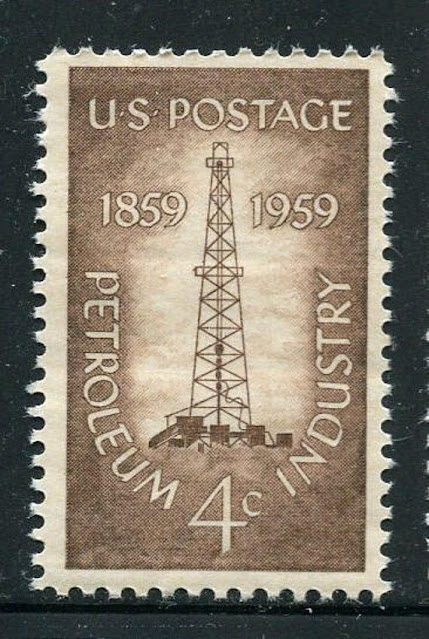
The exclusive cacheted cover is adorned with striking imagery: oil rigs and jack pumps set against a world map to symbolize the global network of petroleum. The cover features a historic 4-cent U.S. postage stamp commemorating the centennial of America’s first commercial oil well, drilled by Edwin Drake near Titusville, Pennsylvania, on August 27, 1859. 

Source: Internet

While issuing this stamp on August 27, 1959, Postmaster General Arthur Summerfield had commented: 

“The American people have great reason to be indebted to this industry. It has supplied most of the power that has made the American standard of living possible.”

(Source: Internet)

A total of 115,715,000 of these stamps were printed by the Bureau of Engraving and Printing. PPSI’s anniversary cover which was cancelled in Titusville, resonates the legacy of petroleum philately.

At the heart of the Petroleum Philatelic Society International (PPSI) lies a philosophy grounded in shared passion, global connection, and unwavering dedication to petroleum philately. For over five decades, PPSI has served as a unifying force, drawing together enthusiasts and professionals worldwide who appreciate the rich stories captured in petroleum-themed stamps. As PPSI looks to the future, it remains committed to inspiring, educating, and celebrating the remarkable legacy of the petroleum industry through the unique lens of philately.

Webliography:

  1. https://www.ppsi.org.uk/files/pswcountryselect.php
  2. https://www.linns.com/news/us-stamps-postal-history/2016/june/cachetmaker-lazaroff-50-ceremonies-50-states.html

Disclaimer:

The noble objective of this blog, is to promote the hobby of philately through images of stamps, a few pictures and related narration. The scans, featured in this blogpost are mine while others (sourced from internet) are properties of their respective owners. No intention to infringe any type of copyright. 

The information provided in the article is for general informational purposes only. All information is provided in good faith. This is only for sharing of knowledge of philately with philatelist fraternity of the world. No commercial or political angle, whatsoever, is involved. This is not a historical document. Apologies in advance, should there be any inadvertent error. Under no circumstances, I shall have any liability for reliance on any information provided in the story.

*************

This was published in world wide popular philatelic e-magazine 'Ananthapuri Stamp Bulletin' January 2025 issue.

Cover page

Index page

Page no. 10
Page no. 11


Monday, 16 September 2024

Engineers India Limited (EIL)

Commemorative postage stamp of EIL (March 27, 2015)

India achieved independence from British rule on August 15, 1947. In the decade that followed (1947-1957), the newly formed Indian government undertook strenuous efforts to stabilize and advance the economy. Various sectors, from agriculture to heavy engineering, were targeted to foster self-reliance. The petroleum sector was no exception. At that time, Indian market was dominated by multinational corporations such as ESSO, Caltex, Burmah-Shell, etc. There was no domestic oil company to meet the demand of petroleum products of the country. Recognizing the strategic importance of the oil industry to national security, Indian government sought to dismantle the monopolistic control of these foreign entities. Consequently, significant attention was directed toward developing the Indian petroleum sector.

First Day Cover of EIL

In 1955, Keshav Dev Malviya, then the Petroleum Minister and often regarded as the father of the Indian petroleum industry, established the Oil and Gas Division within the Geological Survey of India. This division was soon reorganized into the Oil and Natural Gas Directorate under the Ministry of Natural Resources and Scientific Research. On August 14, 1956, it was elevated to the status of the Oil and Natural Gas Commission. Later it became Oil and Natural Gas Corporation Ltd.

In August 1958, the Government of India founded Indian Refineries Limited to oversee the construction of oil refineries and pipelines in independent India. Firoz Gandhi was appointed as the first Chairman of Indian Refineries Limited, serving from 1958 to 1960.

On February 18, 1959, Oil India Private Limited was incorporated, and by 1961, it had become a joint venture between the Government of India and Burmah Oil Company Limited.

The Information Brochure of EIL postage stamp

Another significant development occurred on June 30, 1959, with the incorporation of Indian Oil Company Limited under the Companies Act of 1956. This entity was tasked with marketing petroleum products to be produced by the refineries under construction by Indian Refineries Limited, in Guwahati and Barauni. S. Nijalingappa served as its first Chairman from 1959 to 1962, and B. Arora was its first Managing Director.

To streamline operations and enhance efficiency, Indian Refineries Limited was dissolved and merged with Indian Oil Company Limited in September 1964, forming Indian Oil Corporation Limited. This merger marked the birth of a fully Indian company, aimed at integrating the supply chain and optimising management practices with refining operations. P. A. Gopalakrishnan was appointed the first Chairman of Indian Oil Corporation Ltd., serving from 1964 to 1966.

In the happening era of Indian hydrocarbon sector, the Government of India emphasized the development of domestic engineering services for the petroleum sector. 

On June 27, 1964, the Government of India and Bechtel International Corporation (BIC), USA, signed a Memorandum of Agreement. This was followed by a Formation Agreement on November 20, 1964. On March 15, 1965, under the Companies Act, a private limited company named Engineers India Private Limited was established.

In the year 1996, the government of India divested approximately 6% of its shareholding in the company. By May 1967, all agreements—including the Memorandum of Agreement, the Formation Agreement, and a Technical Services Agreement between Engineers India Private Limited and Bechtel Overseas Corporation (BOC) were terminated by mutual consent. This decision, reached through negotiations involving the Government of India (GOI), BIC, and BOC. This resulted in Engineers India Private Limited becoming a wholly-owned enterprise of the Government of India, christened as Engineers India Ltd. (EIL). The establishment of Engineers India Ltd. was part of the Government of India’s strategy to foster technological innovation within the domestic hydrocarbon sector through a home-grown entity. 

In June 1967, Engineers India Ltd. entered into new agreements with BOC and BIC to formally release all employees from any liabilities, obligations, or duties under the terminated agreements.

Autographed by the then C&MD, EIL

In 1965, Engineers India Ltd., made significant progress, with its consultancy and engineering services for Madras Refinery Ltd. (now Chennai Petroleum Corporation Ltd., a subsidiary of Indian Oil Corporation Ltd.). At that time, Madras Refinery Ltd. was a joint venture between the Government of India, AMOCO, and the National Iranian Oil Company (NIOC).

In 1969, EIL entered into petrochemicals sector. It undertook aromatics and olefins projects of the then Indian Petrochemicals Corporation Ltd., (presently Reliance Industries Ltd.) at Baroda (now Vadodara).

After establishing a strong foundation in engineering and consultancy for the petroleum industry, Engineers India Ltd. expanded into defense technology and high-tech space engineering in 1974. The company began undertaking projects with the Defense Research and Development Organization (DRDO) and the Indian Space Research Organization (ISRO).

The momentum of Engineers India Ltd. continued to grow as it advanced through various successful and challenging projects in both terrestrial and space domains. In 1979, the company ventured into deep water, taking on the significant task of designing, fabricating, and supervising the erection of Bombay High North (BHN), which was India's largest offshore processing platform at that time.

Autographed by the then Director (Finance)

In 1970, Engineers India Ltd. embarked on its first international assignment, marking the beginning of its global expansion. Since then, EIL has experienced continuous growth and now operates global inspection offices in London, Milan, Shanghai, and Russia. The company has successfully implemented critical project assignments across a diverse range of locations, including Abu Dhabi (ADCO and GASCO), Algeria (SONATRACH), Bangladesh (Bangladesh Petroleum Corporation), Iran (PIDMCO), Kenya (Kenya Petroleum Refineries Ltd.), Kuwait (Technimont), Nigeria (Dangote Oil Refining Company), Mongolia (Mongol Refinery State Owned LLC), Oman (Oman Refineries and Petroleum Industries Company) etc.

Engineers India Ltd. made its mark in various sectors, including the fertilizer industry in 1971 and metallurgy in 1972. By 1976, the company expanded its scope to include cross-country underground pipeline projects for transporting petroleum oil and natural gas.

In 1989, Engineers India Ltd. made a significant investment in its future by establishing its own state-of-the-art Research and Development Centre in Gurugram, Haryana. This facility represented a substantial commitment of funds, technology, and talent, further strengthening EIL’s capabilities and innovative edge.

A visit to R&D Centre of EIL

Certification Engineers International Ltd. (CEIL) is a wholly owned subsidiary of Engineers India Ltd. Ramagundam Fertilizers and Chemicals Limited (RFCL) is a joint venture company among Engineers India Ltd. (EIL), National Fertilizers Limited (NFL) and Fertilizer Corporation of India (FCIL). It also holds 4.37% stake in Numaligarh Refinery Ltd., in Assam.

TEIL Projects Ltd., is another joint venture with Tata Projects Ltd. In international arena. Engineers India Ltd. has formed another joint venture with Jabal Dhahran of Saudi Arabia and IOT Infrastructure and Energy Ltd. of India to form Jabal EILIOT Co. Ltd. The objective is to explore the business opportunities in petroleum and infrastructure sectors in Saudi Arabia.

Training Centre of EIL, Gurugram, Haryana

As a part of celebration of glorious 50 years of service to the nation, a commemorative postage stamp of Engineers India Limited was issued by the Department of Posts, Ministry of Communications & IT. The stamp was released by Narendra Modi, Hon’ble Prime Minister of India on March 27, 2015 during the event Urja Sangam 2015 organized by Ministry of Petroleum and Natural Gas at Vigyan Bhawan, New Delhi. The stamp and First Day Cover were designed by Brahm Prakash. The cancellation design was credited to Alka Sharma. A total 0.65 million stamps were printed at Security Printing Press, Hyderabad. 

A letter received from EIL bearing EIL stamp (used through post)

The momentum of progress by Engineers India Limited continues unabated. Today, Engineers India Limited stands as a premier design, engineering, procurement and constructions (EPC) management firm under the Ministry of Petroleum and Natural Gas, Government of India. Though Engineers India Limited is providing services primarily focused on petroleum and petrochemical industries in India and abroad, it has left its indelible footprints in the other sectors like infrastructure, fertilizer, solar power, biofuels, nuclear energy, water management, waste management, to quote a few. 

Ms. Vartika Shukla at an international conference of petroleum industry

Leading this prestigious organization is Ms. Vartika Shukla, who assumed the role of Chairman and Managing Director in 2021. She is the first woman to hold this position at EIL and has been with the company for 32 years.

Ms. Vartika Shukla was putting autograph on EIL First Day Cover

Ms. Shukla earned her B. Tech in Chemical Engineering from the Indian Institute of Technology, Kanpur, in 1988. That same year, she joined EIL as a management trainee in the Process Division. Through her unwavering dedication, commitment, hard work, and exceptional leadership, she has ascended from her initial trainee role to the esteemed position of Chairman and Managing Director.

Proud display of collection

In recognition of her significant contributions to both the industry and to the nation, she has received several prestigious awards, including the Distinguished Alumnus Award from IIT Kanpur (2021), the Woman Executive Award from PETROFED, the SCOPE Excellence Award, and the MoP&NG Innovation Award, among others. 

Autographed by Ms. Vartika Shukla

Under her able leadership, Engineers India Limited continues to march ahead. It has emerged one of the leading EPC companies in South Asia. This year (2024), this Navratna public sector undertaking is celebrating its Diamond Jubilee (60 years) of serving the nation. Many more miles to go for this amazing organization.


Bibliography:

https://engineersindia.com/

https://cpcl.co.in/

https://economictimes.indiatimes.com/engineers-india-ltd/infocompanyhistory/companyid-4582.cms

https://www.pib.gov.in/newsite/PrintRelease.aspx?relid=117778

Acknowledgement: Ms. Vartika Shukla, C&MD, Engineers India Limited

**************

Disclaimer:
The noble objective of this blog, is to promote the hobby of philately through images of stamps, a few pictures and related narration. The scans of a few stamps, featured in this blogpost are mine while others (sourced from internet) are properties of their respective owners. No intention to infringe any type of copyright. 

The information provided in the article is for general informational purposes only. All information is provided in good faith. This is only for sharing of knowledge of philately with philatelist fraternity of the world. No commercial or political angle, whatsoever, is involved. This is not a historical document. Under no circumstances, I shall have any liability for reliance on any information provided in the story.

Wednesday, 27 December 2023

Death of Diesel

Source: Internet

It was dead of night of 29 September 1913. A steamship named SS Dresden was on her voyage from Antwerp, Belgium to Harwich, England. The ship sailed through the water of English Channel; little murmur of the engine was breaking the eerie silence of the surroundings. 

At around 10 pm, one of the passengers of the vessel, who had boarded the vessel in the evening, after his dinner, went to his cabin to sleep. While leaving the dining hall, he told the porter to wake him up at 6:15 am next day morning. That was the last time, he was seen by the fellow passengers and the crew of the ship. Subsequent morning when the porter went to wake him up, he found the door of the room was kept ajar. His bed was still neatly laid up which meant that he had not slept on the bed on the previous night. His night-suit was intact and unused. A search was undertaken at all possible corners of the ship. But no trace of the person was found. He had vanished in the thin air of the channel. He was declared missing from the board. 

A diary was found on the side table of his bed. The particular page of that date in the diary was found marked cross (X). His disappearance might be connected to a few possibilities:

Firstly, he might have slipped from the deck of the ship.

Second possibility was that he might have jumped into water, and committed suicide, and 

third possibility, more intriguing, he might have been murdered and thrown overboard. 

To find the answer of the mysterious vanishing of the person, whether it was a suicide or a murder, we shall explore a bit, little later.

On 10 October 1913, the crew of a Dutch North Sea steamer noticed a floating bloated human corpse on the water, in the vicinity of the route of SS Dresden. It was so badly decomposed that it could not be retrieved from water. So, they decided that it should have a watery grave. But wisely they recovered a few belongings from the highly decomposed body - a wallet, one paper knife and a few small items. Later, the son of the person confirmed that those items belonged to his missing father.

(Source: Internet)

The name of the missing person was Rudolf Christian Karl Diesel, the famous German mechanical engineer and inventor. He was the man behind the invention of the Diesel engine, that runs on Diesel oil and has subsequently revolutionised the world. Both the engine and fuel carry his name, even today.

The diesel engine, created by Diesel at that time, was very bulky in size and was fit for static industry or large ships. Application of diesel engine in automobile sector dawned a little later, by mid-1920s, when a comparatively compact diesel engine for road transport sector was developed by Clessie Cummins. Mercedes-Benz introduced diesel driven automobile in 1936.

(Source: Internet)

He was born on 18 March 1858. 

(Source: Internet)

On 18 March 1958, on his 100th birthday, the German Post issued a blue-green commemorate postage stamp on the personality. 

(Source: Internet)

It was designed by Prof. Hermann Schardt who had included an image of Diesel and a sketch of his diesel engine. 

(Source: Internet)

Germany issued another commemorative stamp on 28 August 1977, featuring him while commemorating the centenary of invention of diesel engine. Besides Germany, several countries have honored the inventor by issuing postage stamps on him. Some of them are:

Central African Republic - 21 December 1986

Maldives - 26 December 1989 and 04 October 2018

Cuba - 20 January 1993

Gibraltar - 01 March 1994

Uruguay - 08 December 1997

North Macedonia - 18 June 2008

Guinea - 20 October 2008

Vietnam - 29 September 2013

Sierra Leone - 30 August 2018

(Source: Internet)

There was an interesting twist for stamps issued on 01 February 1993 by Western Sahara on Diesel and his diesel engine. Morocco Postal Services vide their circular number 414 of 2002, number 69 of 2004, and number 71 of 2008, has declared those stamps of Rudolf Diesel were illegal issues. 

(Source: Internet)

They have clarified that there was no operational post office under the control of the Sahrawi Arab Democratic Republic when those stamps were released.

(Vietnam Post, Source: Internet)

Let us examine the possibilities of mysterious disappearance of Rudolf Diesel. 

He was insomniac so it may fit well that after dinner he might be taking a stroll on the deck. But the idea of his accidental slippage from the deck into water does not hold water because on that night there was no rough or stormy weather. 

(Source: Internet)

The suicide theory was propagated based on his financial status. It was said that he was getting nearly broke. To examine the suicide angle, his possible financial stress was analyzed. It was found that before boarding the ship, he had left a bag with his wife, with a strict instruction that it was to be opened after one week of his departure. Later, on opening the bag, a reasonable amount of cash and financial statements indicating debts were found. The criticality of financial conditions was debated as previously he had generated great wealth through his new innovations.

(Source: Internet)

The cross-mark (X) on the page of diary remained shrouded with mystery. Several possibilities are there. Whether he was contemplating to commit suicide or had a hunch that he would be attacked by someone during the voyage remained unanswered. Another unanswered question is that was it marked by himself or someone else put the mark, in order to divert the attention towards suicide theory.

Now the third angle of possibility of his murder. Who would be interested to kill an inventor like him? For the analysis purposes, there are two different approaches. Firstly, the time of his disappearance was a period of tension between Germany and UK which ultimately followed by full-scale World War I (28 July 1914 – 11 November 1918). Was he travelling from Germany to London to sign a secret deal for technology transfer of his diesel engine to British Navy? 

Alternatively, whether his continuous research to use vegetable oil (like peanut oil) as fuel had raised red flag among the petroleum oil magnets of that era?

There are only endless questions but no answer.

Today, the well-oiled wheels of twenty first century are driven by diesel oil. Concerned with global warming caused by diesel engines, countries are progressively working on bio-diesel. The oils extracted from various plant seeds are being tried in lieu of diesel in vehicle engines to reduce emission of green house gases (GHGs). Is the civilisation completing a full circle, in fuel front, as Diesel had progressed considerably in his research work to use peanut oil and other seed oils as fuel? 

If bio-diesel become reality on a large scale across the world, then it will put a break on the reckless process of dieselisation of industry and that may be a fitting tribute to the researches of Diesel which he could not complete due to unfortunate untimely demise. 


Bibliography:

  1. https://colnect.com/en/search/list/collectibles/stamps/q/Rudolf+Diesel
  2. https://the-line-up.com/rudolf-diesel
  3. https://www.bbc.com/news/business-38302874
  4. https://www.history.com/this-day-in-history/inventor-rudolf-diesel-vanishes
  5. https://www.websleuths.com/forums/threads/international-rudolph-diesel-inventor-55-ss-dresden-english-channel-29-sep-1913.692462/
  6. https://www.youtube.com/watch?v=bLzMvbqMVQE

Disclaimer:

The noble objective of this blog, is to promote the hobby of philately through images of stamps, a few pictures and related narration. The scans of a few stamps, featured in this blogpost are mine while others (sourced from internet) are properties of their respective owners. No intention to infringe any type of copyright. 

The information provided in the article is for general informational purposes only. All information is provided in good faith. This is only for sharing of knowledge of philately with philatelist fraternity of the world. No commercial or political angle, whatsoever, is involved. This is not a historical document. Under no circumstances, I shall have any liability for reliance on any information provided in the story.


*************

The story was published in the February 2024 issue of the popular philatelic digital magazine, Ananthapuri Stamp Bulletin.

The cover page

The index page

Page 1 of 3

Page 2 of 3

Page 3 of 3


Thursday, 9 November 2023

Petroleum Philately of India: SERVO, The Lubricant


Servo - My Stamp

On 28 January 2023, a My Stamp and Special Cover on 50 years of Servo brand of lubricants of Indian Oil Corporation Ltd. was issued by India Post. The lubricant brand called Servo was introduced to Indian  market in the year of 1972 by the Fortune 500 company. The formulation of the product and its variety is credited to the Research and Development (R&D) division of Indian Oil Corporation Ltd. The R&D Centre of Indian Oil Corporation Ltd., is located in Faridabad, near New Delhi. It is a great domestic achievement of R&D effort wherein nearly 5300 formulations and 1600 grades of lubricants are made available in the product mix. In collaboration with Original Equipment Manufacturers (OEMs), it is continuously developing new lubricants for different market segments.

Golden Jubilee of Servo

As fuel oils are required to run an engine or machine, lubricant and greases are integral part for keeping the moving parts in a machine well oiled. When two moving parts of a machine, come in contact with each other, friction happens, generating heat and causing erosion of the parts in contact. Lubricants play a critical role by reducing friction and thereby minimising the wear and tear of machines and equipment. Besides reduction in friction, other utilities of lubricants are reduction of oxidation, prevention of corrosion, transmission of power, controlling the generation of heat, seal against dust particles etc. The ability of a lubricant to reduce the friction is called 'Lubricity'. The lubricity of a lubricant enhances the efficiency of the mechanism. 

Servo - My Stamp

History dates back 1400 BC regarding application of lubricants in the wheels of horse driven chariots. However, those lubes were mostly vegetable oil based or sourced from animal fats. Some of such vegetation lubricants were from olive oil, castor oil, peanut oil etc. After 16th century, whale oil and porpoise (aquatic mammals) oil found wide application. Whale fat was one of the most popular lubricant used over a long period of time, across the globe. Vegetable oil based lubricants have limitations of oxidation stability, high pour point etc. As human civilisation moved from manual output to mechanised industrial revolution, the need for lubricants was felt at the factories of mass production. Industrial growth prompted mankind to look for lubricating oils which were much more efficient. Lubricants of petroleum oil origin found their application in the early 1900s. In today’s world, majority of lubricants are based on petroleum oil. 

Servo - My Stamp and Selvedge

As the application of machinery increased by leaps and bounds, it was experienced that petroleum oil based products were not effective enough for the desired task of lubrication. Researchers burnt midnight candles and additives entered in the field of lubricants. Thus, today's lubricants are brilliant and judicious combination of one or more base oils and selective additives to have particular characteristics and performances. In other words, additives are compounds which are blended in a particular ratio with base oils to enhance the performances of the lubricants.

Servo - Full Sheet of My Stamp

Lubricants or 'lubes' are generic terms describing engine oils, gear oils, greases, hydraulic fluids, transmission oils etc. While motor oil enhances fuel efficiency of automotives, gear oil lubricates parts of gear components. Lubricants have application in all types of industry viz. automobile, cement, textile, steel, petrochemical, mining, marine, etc. Based on its utilities, it is broadly classified as automotive and industrial grade lubricants. Automotive lubricants improve vehicular performance and enhances engine longevity. Industrial lubricants are used in heavy duty application of various industries.

Source: Internet

Major players in international lubricant market are Sinopec Corporation of China, Royal Dutch Shell plc of The Netherland, ExxonMobil Corporation and Chevron Corporation of US, BP Plc of U.K., Total S.A. of France, Petronas of Malaysia etc.

The history of petroleum based lubricant production in India dates back 1960s. 

In the year 1962, an agreement was signed between newly formed (1960) Indian Oil Corporation Ltd., and Mobil Petroleum Co. Ltd., New York for setting up two lubricant blending plants, one each at Kolkata (then Calcutta) and Mumbai (then Bombay). On 25 March 1963, a new joint venture company with 50:50 share between Indian Oil Corporation Ltd., and Mobil Petroleum Co. Ltd., was formed and it was named as Indian Oil Blending Ltd., which set up lube plants.

Source: Internet

Lubricants of the joint venture was initially marketed through Mobil network. On 19 July 1974, the said agreement was terminated. The 4000 equity shares of Indian Oil Blending Ltd., that was held by Mobil, was transferred to Indian Oil. Thus, Indian Oil Blending Ltd., became a fully owned subsidiary of Indian Oil. After the expiry of the agreement, effective July'1974, Indian Oil Corporation Ltd., started directly marketing Servo brand lubricants.  

Source: Internet

In the year 1966, another lubricant company named Lubrizol India Limited was formed with 60% of the subscribed equity held by Government of India and balance 40% shareholding by Lubrizol Corporation U.S.A. It was based on continuous Technology Transfer Agreement for transfer of R&D knowledge, manufacturing and formulation technologies etc. The company was involved in development, manufacture and supply of chemical additives and speciality chemicals, chiefly for petroleum sector. The plant was established in 1969 in Mumbai (then Bombay). In March 2000, it was restructured as joint venture with Indian Oil Corporation Ltd. (50:50). Today it is known as Lubrizol India Private Ltd.

Servo - The Super Brand

Servo had made humble entry in Indian market and it has moved from a 'World-Class Engine Oils' to today’s 'World-Class Lubricants'.  The tagline 'Add Servo Add Life' is self-explanatory. 

SERVO ADDS LIFE

In the year 2016, Servo was awarded 'Superbrand' by Superbrands India Pvt. Ltd., the Indian subsidiary of Superbrands, the world’s largest independent arbiter of branding. Presently, the brand is available in 37 global markets, ranging from neighbouring countries e.g. Bangladesh, Nepal, Sri Lanka to Mauritius, Middle East, Thailand, Vietnam, and various African countries etc. Servo has partnered with the Mohammed Yousuf Naghi group of the Kingdom of Saudi Arabia, the renowned business conglomerates of the country.

Source: Internet

In the domestic lubricant segment, major competitors of Servo of Indian Oil Corporation Ltd., are lubricants from the Bharat Petroleum Corporation Ltd. (MAK, Glide), Hindustan Petroleum Corporation Ltd. (Turbo), Gulf Oil International Ltd. (Gulf), and BP p.l.c (Castrol). 

Lubricant from Bharat Petroleum

These five majors occupy about 67% of Indian lubricant market. Besides, there are strong presence of Valvoline, Elf, Total, etc., in the marketplace.

Source: Internet

In 2022, the global lubricant market was worth USD 117.31 billion. During 2022-2029, it is expected to grow at a CAGR 2.3%. The lubricant market of India is the world’s third largest (behind of US and China). While the lubricant market of US is stagnant, the growth noticed in China market is slow.  On the contrary, Indian lubricant market is the fastest growing one. In 2020, the Indian lubricant market was valued at USD 1.4 billion. From 2021 to 2027, it is expected to grow at a CAGR 3.8%. The demand of automotive lubricant is directly related to the sales of automobiles, expansion of road infrastructure, and vehicular movement on road (commercial, passenger and two-wheelers). Under present conditions, all these weathervanes are favourable for Indian lubricant market.

In the quest of sustainability, global automobile industry is firing all cylinders to move from traditional vehicles to electric vehicles (EVs). A demand of new kind of lubricants are expected to emerge in this domain. Side by side, the need of the hour is the collection, disposal and/or re-refining of used lubricants. The used lubricant market in India is a fragmented and in unorganised domain. In order to protect the environment and leaving a better and healthy earth for future generations, all lubricant manufacturers and marketers should create a robust system of collection and proper disposal/processing of used lubricants. The circular economy will benefit all the stakeholders of today and tomorrow. 


Bibliography:

https://www.futuremarketinsights.com/reports/india-industrial-lubricants-market

https://link.springer.com/content/pdf/10.1557/S0883769400055895.pdf

https://www.jetir.org/papers/JETIRZ006093.pdf

https://www.fortunebusinessinsights.com/industry-reports/lubricants-market-101771

https://www.moneycontrol.com/company-facts/indianoilcorporation/history/IOC


Disclaimer:

The noble objective of this blog, is to promote the hobby of philately through images of stamps, a few pictures and related narration. The scans of My Stamp, featured in this blogpost are mine while others (sourced from internet) are properties of their respective owners. No intention to infringe any type of copyright. 

The information provided in the article is for general informational purposes only. All information is provided in good faith. This is only for sharing of knowledge of philately with philatelist fraternity of the world. No commercial or political angle, whatsoever, is involved. This is not a historical document. Apologies in advance, should there be any inadvertent mistake or error. Under no circumstances, I shall have any liability for reliance on any information provided in the story.

*************

This story was published in Ananthapuri Stamp Bulletin (December'2023 issue), the popular philatelic e-magazine.

Cover page

Index


Page 1 of 3


Page 2 of 3

Page 3 of 3


Narain Niwas Palace Hotel – A Heritage Hotel at Jaipur, Rajasthan, India

  Narain Niwas Palace Hotel Imagine about India before 1947, a mosaic of glittering princely states ruled by majestic kings, queens, rajas, ...