Contact form

Name

Email *

Message *

Showing posts with label African Safari. Show all posts

Tuesday, 27 June 2023

Baobab: A Tree of Life

A 2000 year old Baobab tree at Saadani village, Tanzania, Africa

If we think of something longest living on this mother earth, a single name surfaces in our minds that is Baobab tree. Its scientific name is Adansonia Digitata, named after Michel Adanson, the French botanist who first identified the specie in Senegal, Africa (1750 CE). 

Subpecies of Adnansonia Digitata, Australia (Source: Internet)

In its lifetime, a baobab tree witnesses several centuries, standing still at one place. It has an extra-ordinary lifespan of 1500-2000 years! One baobab tree in Namibia has been found to be 1275 years old, through C-14 dating process. Some tree can grow very tall, up to 60 feet while the diameter of the trunk may be as large as 30 feet. But there are bigger specimens as well.

The botanical giant at Saadani, Tanzania
The look of the tree is very unusual - an elongated barrel-like bulbous trunk (bottle-shaped or cylindrical) with branching off at the top to form canopy. The trunk is very wide and swollen, devoid of branching and foliage mostly at the top. Its flowers bloom only at night.

The overall crazy look, extra-ordinary longevity and several benefits that it offers to mankind and wildlife, makes it special. In several geographic regions of the world, they command respect from local culture and religious beliefs. Why baobab tree is important to earth?

The enormous trunk (Saadani, Tanzania)

Local people use almost every part of the tree for some purpose or other. Its fruits, leaves, seeds, roots, bark etc., are sources of food for not only humans but also various wildlife. The strong fibre of the bark is converted into rope and cloth. Its oil has medicinal value. In arid and dry zone, a baobab tree is a natural reserve of water. A typical tree is a storehouse of about 1200 gallons of water. It is rightly called Tree of Life.

Issued by Madagascar Post (Source: Internet)

Source: Social media

Today, there are nine known species of baobab tree - two are endemic of Africa, six are endemic to Madagascar and one is endemic to northwestern Australia. 

By Australia Post (Source: Internet)

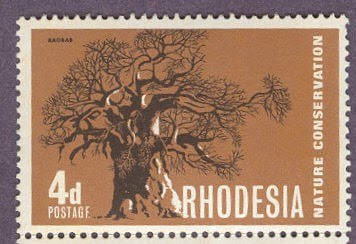
In Africa, giant baobab trees are found in Tanzania, Ethiopia, Kenya, Mozambique etc. Total 33 countries (Africa has 54 countries) of western and central African countries, have the baobab trees. Besides the continents of Africa and Australia, it is found across Barbados, Hawaii, Sri Lanka, including India. The baobab is a feature in postage stamps of the countries where they are found in abundance. 

A beautiful emission by French Post (Source: Internet)

The tree has several names. Because of its branch sprouting from the top, it is called ‘Upside down tree’ or the tree that fell from the heavens. The seeds have high content of vitamin C, which has earned the Lemonade tree name. In Tanzania, Africa in Swahili language, its name is Ubuyu.  Ubuyu, the baobab fruits are especially enjoyed by the local children. The ubuyu experience is enjoyed while sucking the dyed red baobab seeds that have been boiled and coated in a lavish mix of sugar, salt, black pepper, cardamom, and vanilla. 

An endemic to Tanzania (Location: Bagamoyo, Tanzania)

Believe me, baobab trees, though not native of India, are found in many places in the country. They are still growing in places of Bihar, Jharkhand, Goa, Gujarat (Kutch, Kathiawar etc.), Madhya Pradesh, Andhra Pradesh, Tamil Nādu etc. Now, a pertinent question is how these botanical giants have arrived in India?

Another botanical giant at Bagamoyo, Tanzania

The first theory is that the seeds or pods of baobab might have floated and drifted from African coastline to Indian shore. The second one makes sense that these plants have arrived in India, courtesy sailors, tradesmen, militia etc., of bygone era. The pods of baobab are rich in vitamins and proteins. They are lightweight and convenient to carry for long journey and fit for prolonged storage. Thus, we may conclude that the pods of baobab have been brought to India by human travellers from outside. There is a third angle as well. Millions of years ago, the collision in Gondwanaland has created today's Australia, India and Madagascar. They have certain similar geographical characteristics. Could that be a reason too?


Baobab from Barbados Post (Source: Internet)

In India, baobab is known by different names in different regions. In Hindu mythology, it has been referred as Kalpavriksh, Kalptaru, Parijaat, Manokamna purti, Ikchha purti or a Wish fulfilling tree. 

From India Post

A se-tenant pair of two stamps on Parijat tree was issued by India Post on 08 March 1997. One stamp depicts the the wide trunk of the Baobab tree and other other stamp has an image of its flowers. 

In Sanskrit, it was referred as Chitrala. A lone, a wish bearing baobab tree stands with religious punctuation in the village called Kintoor, near Barabanki, Uttar Pradesh, India. 

Baobab aka Kalpbriksh at Kintur (Courtesy: https://doi.org/10.1371/journal.pone.0227352.g004)


A Carbon-14 dating conducted in 2019, has given the calibrated age as 775+/- 25 calendar years. According to local folklore, the said tree is known as Parijaat which has grown from the ashes of Kunti, mother of Pandavas of epic Mahabharat, in that place. There are other legends about the tree with different celestial connections. Local people gather to worship the tree, newlyweds’ prey for blessing and a village fair is held every Tuesday near the tree.

In India, another old Baobab tree survives inside Naya Qila (New Fort) near Golkonda Fort, Hyderabad. The diameter of the trunk, at the base, is approximately 25 meter. 
"There's a concealed room in this trunk with space 25-30 people. ...during an attack on the fort, around 20 members of the royal family hid in this room. The entrance, located at the top, allowed entry into a adrk room where a platform-like structure made of stone hinted at makeshift cooking during those days." (Source: Times of India, 31 March 2024).

Her Excellency and baobab (Bechuanaland Protectorate is today's Botswana): Source: Internet

His Excellency with Baobab and Buffalo (Source: Internet)


Emission by Botswana Post (Source: Internet)

There are other Indian names for baobab tree in India. Because of its sour taste (high vitamin C content), it has been related to imli or tamarind in Indian languages. In Hindi, it is called Gorak-amli. It is Aane hunase in Kannada, Aanipuliya maram in Tamil, Brahma malika in Telegu.

Baobab and Botswana Post (Source: Internet)

In central India, Mandu or Mandavgarh (Dhar district) is an ancient city, located in Malwa and Nimar region of western Madhya Pradesh. According to horticulture department of the state, it has more than 1000 baobab trees in the state. Possibly the largest cluster of baobabs in India is available there. It's fruits are called Mandu ki Imli (tamrind of Mandu) or Khorasani imli. It was brought to the region during the reign of Mahmud Khilji in the 14th century. Thus, the name has been attached to Khorasan (region covering present day Iran, Turkmenistan and Afghanistan). 
Indore is another city of Madhya Pradesh. In the compound of Indian Institute of Management, Indore there are three baobab trees.


Beautiful design (Source: Internet)

A bizarre case of taking away of a dozen of baobab trees from the local tribals (Bhils) came to light in June 2022 from Dhar district of Madhya Pradesh, India. There was big protest from residents when they found and stopped trucks loaded with baobab trees to be transported from their locality to a proposed commercial botanical garden at outskirts of Hyderabad, nearly 1000 kilometre away. The protesting villagers were subsequently pacified by the intervening civil administration and baobab trees commenced their journey from central India to southern India! In 2023, the state has applied for its Geographical Index (GI) tag.

In Orchha, Madhya Pradesh there is an enormously large baobab tree which was planted by Maharaja Bir Singh Deo (1605-1626/7), the Bundela Rajput king of Orchha. The great ruler was credited of building forts of Datia, Jhansi and temples at Mathura, Varanasi etc.

Baobab provides food and shelter to wildlife (source: Internet)

From central India, let us have a look at eastern India. A very old Baobab tree is standing tall in the campus of Langat Singh College, Muzaffarpur, Bihar. There are a few baobab trees near Doranda College, Ranchi, Jharkhand. However, sometime back two of them were cut down when there was requirement of widening the road. 

Baobab and message of conservation (Source: Internet)

In the western part of India, Udvada, Pardi taluka, Valsad district, Gujarat is a coastal town. There exists a Baobab tree near the coast. There are eight Baobab trees near Vadodara, Gujarat. In Mumbai, Maharashtra there is one big baobab tree in the heart of the city, near the entrance of Rani Bagh. A few more baobab trees are there within SEEPZ area, Andheri locality of Mumbai. In the premises of Governor's house  in Mumbai there is another big baobab tree.
A very large baobab tree exists at Nagoa beach of Diu Island. 

Southern Rhodesia is present day Zimbabwe (Source: Internet)

In southern part of India, there are places where baobabs are sighted. In Chennai, there is a very large baobab tree at the Theosophical Society in Adyar. The society was established by Madame Blavatsky, the Russian psychic. 

Northern Rhodesia got independence in 1966, became Zambia (Source: Internet)

In Hyderabad, Telangana State, near Golconda fort there is a giant baobab tree which is known as Hathion ka ped (the Elephantine tree). About 10 to 15 trees existing in Hyderabad, near Quthbullapur Municipal office (HMT) Balanagar, and Narsing, Tolichowki area. One can find five baobabs in Pondicherry town.

Southern Rhodesia became Zimbabwe in 1980 (Source: Internet)

As baobabs grow, with the progress of their age, they hollow out inside. Its hollow trunk provides resting space to the travellers. Some of the trunks have served as stables for animals, burial sites and even as prison! And a bar!! 

Baobab dominated stamps of Zimbabwe, pre and post independence (Source: Internet)

In the hollowed trunk of a very old baobab tree, there was a bar. The particular gigantic baobab tree was located in South Africa. In 2009, the department of chemistry, Babes-Bolyai University, Romania estimated the age of that baobab to be 6000 years. The height of the baobab was about 75 feet and the circumference was of more than 108 feet. By some natural process, the trunk of the tree was split into two divisions yet remained conjoint through a passage. Over a period of time, its trunk hollowed within. Since 1933, people started using the hollowed space inside as a small pub. At a later date, the Heather and Doug Van Heerden of Sunland Farm took lease and created a formal bar within its hollow core space. 

Pub inside of the then Pub Tree (Courtesy: amusingplanet.com)

In the tourist circuit, it earned fame as Sunland Baobab Tree, or precisely Pub Tree, a must-see destination in Limpopo province of South Africa. It had a seating capacity of fifteen persons. The inside ceiling of the bar was at 13 feet. Draft beer, accompanied by music was served to the guests. Out of two parts of the trunk, one trunk collapsed in 2016. In March 2019, the Van Heerdens announced the shutting down of popular tourist baobab bar forever. 

Baobab seed oil is a natural skincare and haircare, moisturiser and insect repellent!

But baobab is also a type of crude petroleum oil. Baobab crude oil has a worldwide market due to its ability to remain in liquid state, without freezing, even at (-) 40 degree celsius! Baobab oil field is an ultra-deep-water basin, located at about 25 km off the coast of Cote d' Ivorie (formerly Ivory Coast) at a water depth of 900-1,500 meter. The oil field was discovered in March 2001 and Canadian Natural Resources (CNR) started development work in 2003. The commercial production commenced in August 2005. It produces both crude petroleum oil and natural gas.

Baobab trees are living witnesses of evolving civilisation, have seen rise and fall of several dynasties, etc., yet remained mute spectators. Wish they could speak and throw some light about our lives on earth, several centuries ago.

*****************
The story was published in popular philatelic e-magazine 'Ananthapuri Stamp Bulletin' August 2023 issue. Scans of select pages are as under:

The cover page


The Index

Page 1 of 3

 
Page 2 of 3

Page 3 of 3

Webliography:
1.https://www.britannica.com/plant/baobab-tree-genus
2.https://en.wikipedia.org/wiki/Parijaat_tree,_Kintoor
3.https://www.peepultree.world/livehistoryindia/story/snapshort-histories/baobab-tree
4.https://theindianvegan.blogspot.com/2013/03/all-about-baobab-in-india.html
5.https://outreachecology.com/landmark/lti_d050/
6.https://inhabitat.com/grab-a-drink-inside-a-6000-year-old-baobab-tree-at-south-africas-sunland-bar/big-baobab-bar-south-african-toursim7/
7.https://www.usatoday.com/story/news/factcheck/2021/03/23/fact-check-pub-inside-south-african-baobab-tree-now-closed/4802156001/
8.https://www.amusingplanet.com/2011/11/sunland-baobab-bar-inside-hollowed-out.html
9.https://pdfs.semanticscholar.org/8a1e/b8cb359287f50ae887cfec61f310e8375c70.pdf

Disclaimer:

The noble objective of this blog, is to promote the hobby of philately through images of stamps, a few pictures and related narration. Some of the scans and pictures featured in this blogpost are mine while others (sourced from internet) are the properties of their respective owners. No intention to infringe any type of copyright. 

The information provided in the article is for general informational purposes only. All information is provided in good faith. This is only for sharing of knowledge of philately with philatelist fraternity of the world. No commercial or political angle, whatsoever, is involved. Under no circumstances, I shall have any liability for reliance on any information provided in the story.


Friday, 1 October 2021

A Forest Bound Daughter (Part II)


I can handle my drink

Prelude:

The story of our adopted daughter - Kamok, is being presented in two parts. First part has dealt about her journey from forest to nursery and settling down with her keepers. This second part unfolds about her preparation for reverse journey i.e. from nursery to forest and forever. However, in this Part II, playmates (in photos) of Kamok have been featured. May like to read on.


With my human parent

3.0 Jumpcut:

I, along with other visitors converged at an open ground midst of the forest. A small area in circular form was demarcated with ropes for the babies to arrive. The ground was slushy and muddy. The red soil was wet due to intermittent rain. An official from the trust provided me an umbrella. For me it was a dilemma whether to hold the umbrella or camera?


Ground was wet and slippery

There was a small ditch full of water at the center. 

Water and feed

At some places heaps of sands were there. Fresh twigs and leafy branches of trees were scattered here and there. 

Enough to munch

Another object which drew our notice was giant feeding bottles with big red colored long nipples filled with milk. 

Give me my drink

They were placed on the ground at different strategic places. With bated breath all the visitors waited for their arrival.

Arrival of stars

I was told by the officials of the trust that Kamok was the youngest female calf in the nursery. Immediately I confirmed them that we would like to foster her as our daughter and the formalities would be done after the program was over.

It's my time

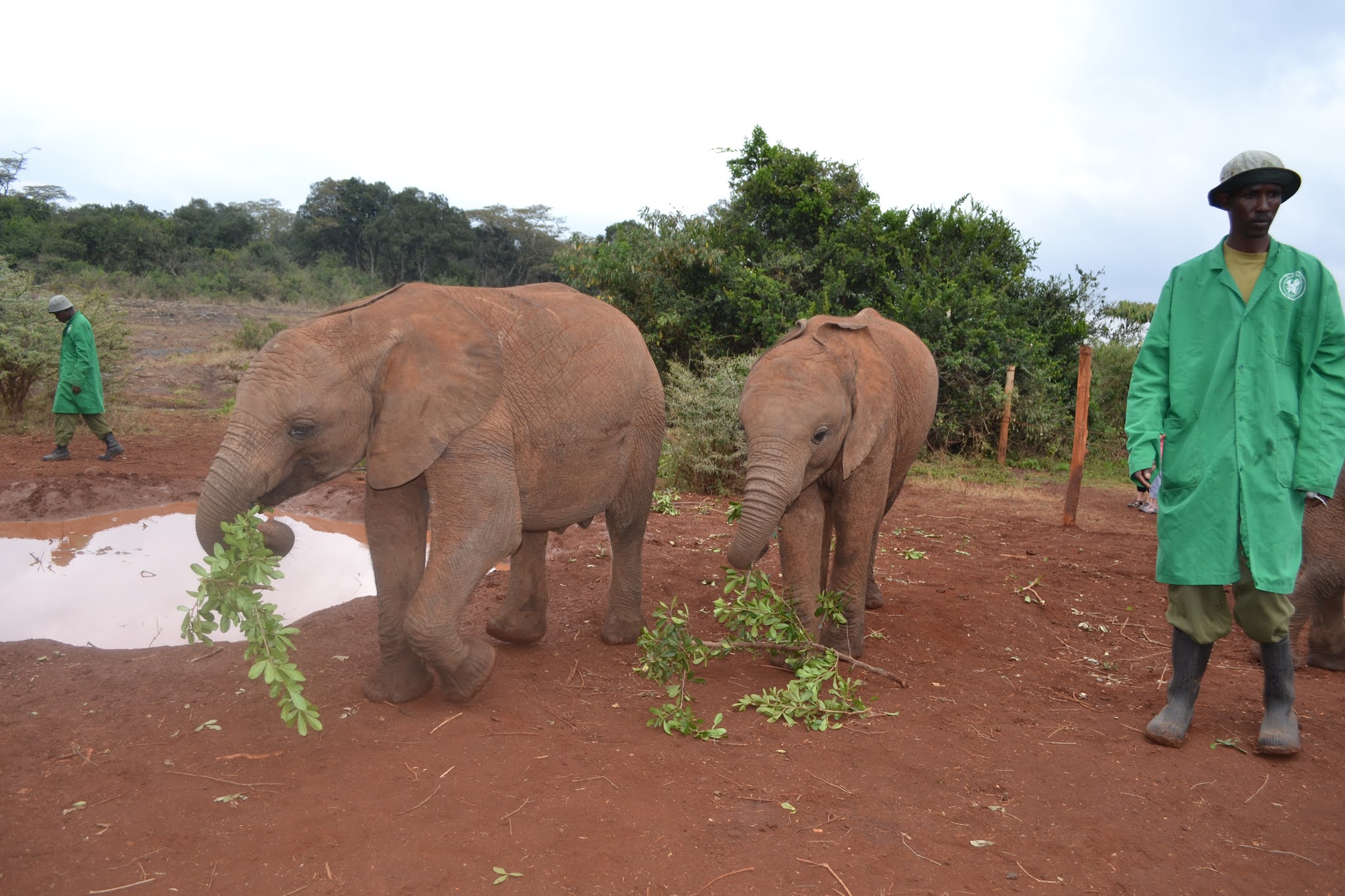
Soon elephant babies started arriving from stockades in batches. Seniors were first to arrive and were followed by the little ones. They all rushed for the feeding bottles of milk. They were helped by the keepers wearing green color overalls. Nearly thirty orphaned elephant babies, of different age, entered into the arena.

Keeper with babies

Little ones needed more help as they were yet to master the skill of holding those bottles with their tiny trunk. Keepers helped them by holding the giant feeding bottle upside down into their mouths. 

However, little grownups were skillful enough in holding the bottles just upright.

Happily 'drunk'

They gulped the milk and a few of them chased the keepers asking for more milk. It was a heavenly scene to watch.

Human parent

While the drinking session was on, very small and cute two babies, accompanied by their keepers, wrapped in bright red and black blankets arrived last. The man in green overall, with a portable mike hanging on his shoulder, announced that one of them was Kamok, the youngest baby. She was incredibly small in size, compared to other baby elephants. She followed her keeper very closely, oblivious of the present audience who were admiring her.


Fight for fun

After they drank milk, it was the time for them to play. They chewed the leaves from the twigs strewn around, played with mud and water. Male calves got into mock fights with others. Boys will be boys! 

Mud bath

It was indeed an extraordinary feeling to watch so many elephant babies playing at one place.

Enjoying mud bath

It continued for nearly one hour.

Mud bath - full enjoyment

Once the clock struck 12 noon they left for their stockades in batches with their keepers, like they had arrived. 

Leaving for stockades

Gradually all of them vanished behind the green curtain of the forest leaving empty milk bottles scattered all over the place.

Vanishing step

At the end of the show, spectators left for the main gate and I went to the office of David Sheldrick Wildlife Trust. There, I completed formalities for fostering Kamok. The process was simple and quick. The required forms were filled in and annual fee was paid for fostering. We became foster parents for Kamok. A certificate, in this regard was issued separately.

As we could not bring our fostered daughter Kamok back home to India, we left her with her keepers, as per procedure, who are experts in handling such children. She would remain at the nursery and gradually get ready for reintegration with wildlife at appropriate time.

The objective of David Sheldrick Wildlife Trust was not to domesticate the orphaned elephant babies but to rear them in such a fashion that in due course of time they could go back to the wilderness. This process of integration of orphaned traumatized babies back to wildlife was a very tedious and time consuming one. Average time frame for reintegration of a baby with normal wild life was ten years. However, the time scale varies depending upon several factors viz. the age and stage at which the baby was orphaned, their abilities to manage themselves without human keepers, willingness to lead independent lives etc.  

Till such time they live at David Sheldrick Wildlife Trust, all expenses were borne by the trust. Large funds were required to meet all kinds of expenditures – food, medicines, rescue, accommodation, transport etc. Donations raised through the way of fostering the kids were utilized in this noble cause. Angela, daughter of Daphne had introduced this unique concept of fund raining through liberal fostering scheme. Minimum contribution was US $ 50.00 per annum and there was no upper limit. One person could foster more than one baby. Also, several persons could foster an individual child. Like me, there were several others parents across the globe fostering Kamok simultaneously.

4.0 Fast forward:

On 7th September 2016, Kamok became three years old, fit and fine. She has grown naughty as well. It was the right time that she would leave the nursery for two reasons. Firstly, she would prepare herself for next stage towards reintegration in the wildlife and secondly, to create space at the nursery to accommodate newer orphans.

So, the decision was taken that Kamok would be relocated to Ithumba Relocation Unit of Tsavo East National Park. Accordingly, December was chosen as the ideal time for her relocation. In the month of December, monsoon would recede from Kenya leaving behind the Tsavo forest covered with green foliage. Waterholes would be full up the brim and rivers overflowing with water. Thus, there would be plenty availability of food and water for relocated elephant babies.

Accordingly, on 28th December, 2016 Kamok along with two other orphan babies Roi and Oltaiyoni were woken up at 3 am at their stockades. They were given mild sedatives, as preparation for tension free ensuing journey. All of them were loaded in a specially designed truck along with their keepers and were sent off to Ithumba Relocation Unit. The journey commenced in the darkness of night and by 10:30 am they were at the destination. Interestingly, they were received by Dr. Daphne, accompanied by Angela, Robert, Taru and Roan.  

Today, nearly five years have passed, since her arrival to Ithumba Relocation unit. She has accepted her new abode and has mingled well with other orphans who have arrived prior to her. Her daily routine involved going to the forest area and browse with other elephant babies - Siangiki, Enkikwe, Barsilinga, Sirimon, Lemoyian to name a few. She still remained fond of milk bottles and mud bath as well.

From reintegration center, one day Kamok would join the elephant community of the Tsavo National Park. As a foster parent, we pray to God that she should go back to the wild, as early as possible, where she belongs. We dream for a day when adult Kamok would embrace motherhood in the forest and would visit the reintegration center to show off her baby girl to her human keepers as was done by many orphaned elephants in the past.


Webliography:

https://www.sheldrickwildlifetrust.org

https://www.sheldrickwildlifetrust.org/asp/orphan_profile.asp?N=299

https://www.sheldrickwildlifetrust.org/asp/fostering.asp

https://www.sheldrickwildlifetrust.org/updates/updates.asp?Rhino=&ID=985

https://www.telegraph.co.uk/news/earth/9100415/The-woman-who-fosters-elephants-in-Kenya.html


Disclaimer:

The information provided in the article is for general informational purposes only. All information is provided in good faith. This is only for the sharing of knowledge of Philately with philatelist fraternity. No commercial angle, whatsoever, is involved. Under no circumstances I shall have any liability for reliance on any information provided in the story.

Friday, 17 September 2021

A Forest Bound Daughter (Part I)

An orphan calf drinking milk

Prelude to Part I:

The story of our adopted daughter - Kamok, is being presented in two parts. This is first part which deals about her journey from forest to nursery. Second part will unfold about her preparation for reverse journey i.e. from nursery to forest, and forever. May like to read on.

1.0 Preparation:

It was a cloudy morning of 1st of December at Nairobi. I had set out in search of a beautiful Christmas gift for my better half Sonali Sen Biswas. The gift should be too precious to give as well too unique to receive. However, instead of heading for a shopping mall (mind it that nearly two months back a terrorist attack had claimed several innocent lives at the Westgate Mall of the city), I drove towards Nairobi National Park of Kenya (Eastern Africa). Incidentally, Nairobi National Park is the only national park within a city in this whole world. Under this early cloud masked sky my destination was David Sheldrick Wildlife Trust (DSWT). 


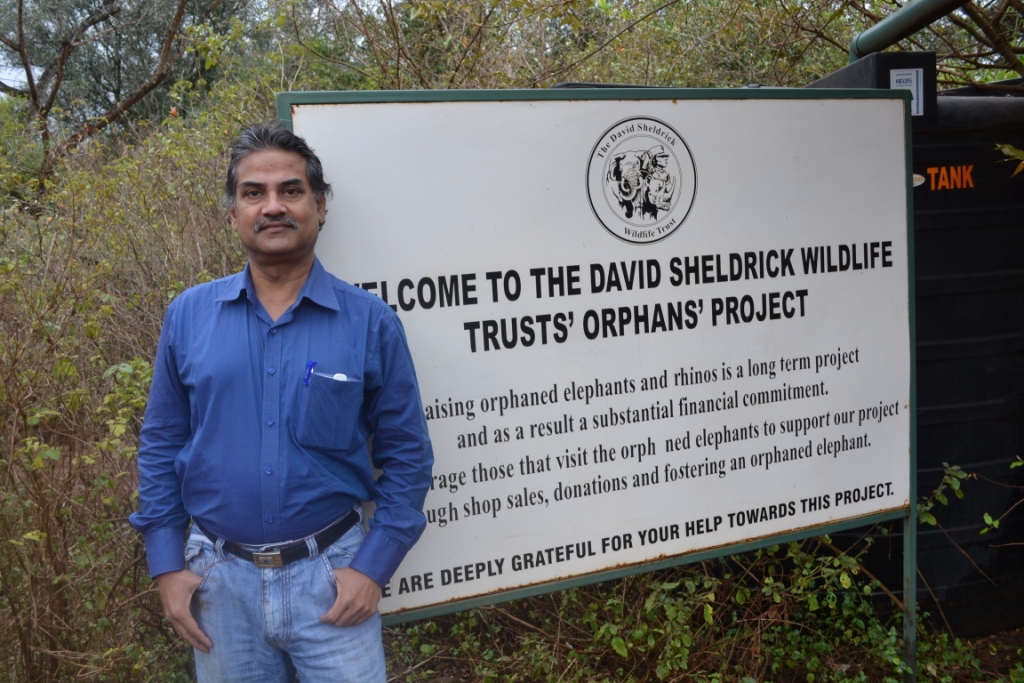
Welcome board

David Sheldrick Wildlife Trust was founded by Dr. Dame Daphne Sheldrick D.B.E, in the year of 1977, in the fond memory of her late husband David Leslie William Sheldrick MBE. He was the founder warden of Tsavo East National Park, Kenya. Later, David Sheldrick Wildlife Trust was incorporated as a Charitable Company in the U.K. (2004). Angela Sheldrick, the younger daughter of David and Daphne, was actively involved with activities of David Sheldrick Wildlife Trust since her childhood. After sad demise of Dr. Daphne (13th Apr 2018) at the age of 84 years, the operations and running of trust is being looked after by Angela, her husband Robert Carr-Hartley, and their two sons Taru and Roan.


One hour window

In this month of December, the sky was overcast with moisture laden cloud. There were intermittent rains, sometimes there was drizzle and occasionally heavy downpour. The watery precipitation from sky was sometimes gentle while sometimes violent with gusto. In this not-so-tourist-friendly weather I reached my destination at around ten o’clock in the morning. The milk drinking session of elephant babies of the nursery of David Sheldrick Wildlife Trust would commence daily (excluding the day of Christmas) at 11 am and would close down for visitors by 12 o’clock (local time). The orphanage would open to the visitors only for one hour daily. During one hour session, elephant calves would come in front of the visitors for their share of milk, mud play etc. Because of that reason, there were constant reminders from my local Kenyan driver-cum-guide that I should not be late.

At David Sheldrick Wildlife Trust, orphaned baby elephants (mostly victim of human-wildlife conflicts, poaching etc.) would be brought after rescue, reared till they matured enough for release in the wilderness. However, the expenses were prohibitive as it involved long term commitment.


Milk feeding bottles

Like any other day, on my day of visit too, there were many visitors from different corners of the world to witness the one hour playful session by the pachyderm babies. Entry fee was US$ 7.00 or 500 Kenyan shillings per person. Entry fee was levied and fostering contributions were received by the trust to raise the fund which was used for several purposes. Some of the expense heads were rescue operations, construction and maintenance of stockades/stables for the kids, logistics and transport, milk and food for these baby giants, medicines etc. and though last but not the least was the housing and salaries for the committed local keepers. In other words, till such time the orphaned baby was reintegrated to the wilderness, all requirements were taken care by the trust.

I paid the entry fee and walked through the red colored muddy track towards the arena where orphaned baby elephants would be coming for their share of milk. I also informed the office of David Sheldrick Wildlife Trust that I would be fostering one baby. The selection criteria were – a female child and youngest of the lot. That would be my Christmas gift for that year to my wife.


The certificate

2.0 Flashback:

It was early morning of 8th September 2013. The villagers of Kiparo Boma (livestock enclosure) on Ol Pejeta Conservancy in Laikipia, Kenya woke up hearing some unusual sound. To their utter surprise, they found that outside there was a newly born (one day old) elephant calf desperately looking for her mother for food and comfort. Villagers immediately fanned out in the nearby forest area to find the elephant herd where from they presumed the baby might have got separated.


Kamok during early days (Source: Sheldrick Trust website)

But all in vain.

In spite of their best efforts, villagers could not trace out any elephant herd nearby to get her reunited back.


A baby drawn by milk bottles

They immediately contacted David Sheldrick Wildlife Trust at Nairobi. On getting the emergency call, the rescue team of the trust swung into action. The team with all necessary rescue apparatus and paraphernalia was airborne from Nairobi. It was flight of 40 minutes from Nairobi to Ol Pejeta airfield. On landing, the rescue team found that Ol Pejeta Scouts have already brought the baby from Kiparo boma to the runway of the airfield.


Rushing for milk bottles

The baby was hungry, exhausted and frightened. The team immediately gave her a bottle of milk, a substitute of milk of mother elephant which was developed by Dr. Daphne. Mother’s milk is very important for the first two years for the baby elephant for survival. After three decades of trial and error, Dr. Daphne was successful in developing an alternative of mother's milk for elephant and rhino calves. This substitute has helped in saving many lives of nectar dependent unfortunate orphaned babies of elephants and rhinos. Her expertise in hand rearing milk dependent new born elephant and rhino calves have saved lives of more than 230 orphaned elephants in Kenya. Besides, many more such helpless babies without mothers have survived through her knowledge sharing in Africa and India.


Feeding the kids

Meanwhile, the trained members of the team wrapped the child with blanket for comfort. They helped the calf to board the aircraft and she was put on drip for return journey.

On arrival at the nursery of the trust, where expert veterans were eagerly waiting for them, the health of the baby was checked. It was found that her limbs were compromised at the birth. Because of that reason the poor creature could not match with the movement of the herd. As per the unwritten rule of the wild, a new born elephant baby should be able to walk 20+ kms within 24 hours of birth. Since she could not, she was left behind by her own mother and herd. Though elephants are strongly family oriented, they take such decisions when the risk was envisaged for the entire herd.

Kamok, wrapped in blanket

While experts looked after her for well-being and treatment, the pertinent issue came up for a suitable name. The trust has a system to assign a name to the rescued baby in sync with the location from where it was found, to trace the origin. Thus she was named as Kamok, a name which was taken from the Ol Pejeta ranch.

A closeup of Kamok

With the passing of time, two major improvements were noticed. Firstly with the help of medications and care her wobbly legs got strengths and secondly she became closely attached with her keepers which were healthy signs for rearing a baby without mother. Because of separation anxiety from mother, at times such orphaned babies would go into depression. They would refuse food intake. In such situation it would become difficult for the trust to save the child. However, with God’s grace, Kamok grew playful, started playing with sand and red soil which were in abundance in the locality. Off late, she was found experimenting with her little and cute trunk. She began following her keepers to the bushes and other areas with other orphaned babies.

Here is the link of her rescue:
https://www.sheldrickwildlifetrust.org/orphans/kamok

End of Part I. Continued to Part II.

Webliography:

https://www.sheldrickwildlifetrust.org

https://www.sheldrickwildlifetrust.org/news/updates/the-resuce-of-kamok

https://www.sheldrickwildlifetrust.org/asp/orphan_profile.asp?N=299

https://www.sheldrickwildlifetrust.org/asp/fostering.asp

https://www.sheldrickwildlifetrust.org/updates/updates.asp?Rhino=&ID=985

https://www.telegraph.co.uk/news/earth/9100415/The-woman-who-fosters-elephants-in-Kenya.html

Disclaimer:

The information provided in the article is for general informational purposes only. All information is provided in good faith. This is only for the sharing of knowledge with global reader fraternity. No commercial angle, whatsoever, is involved. Under no circumstances I shall have any liability for reliance on any information provided in the story.

Narain Niwas Palace Hotel – A Heritage Hotel at Jaipur, Rajasthan, India

  Narain Niwas Palace Hotel Imagine about India before 1947, a mosaic of glittering princely states ruled by majestic kings, queens, rajas, ...